
这篇文章给大家分享的是有关织物加拿大创建用户机制的示例分析的内容。小编觉得挺实用的,因此分享给大家做个参考,一起跟随小编过来看看吧。
在研究织物加拿大创建用户,的时候发现很多隐含规则
通过官方文档,我们知道织物-加州可以带有如下几个以高频。开头的属性,我们暂且称之为系统属性
名称类型描述高频。注册者。角色注册者被允许管理的角色列表。注册服务商。授权角色注册服务商被允许为其“高频”向注册服务商授予的角色列表。注册服务商。角色属性hf .注册器。属性注册器允许注册的属性列表。如果属性值为GenCRLBooleanIdentity能够生成CRL .如果属性值为truehf,RevokerBooleanIdentity可以吊销用户和/或证书。如果属性值为truehf,则attributemgrborboidentity能够管理附属关系。如果属性值为
现象一:Boolean类型系统属性
,则中间加拿大身份可以注册为中间加拿大首先,我们用管理创建账户测试_a,
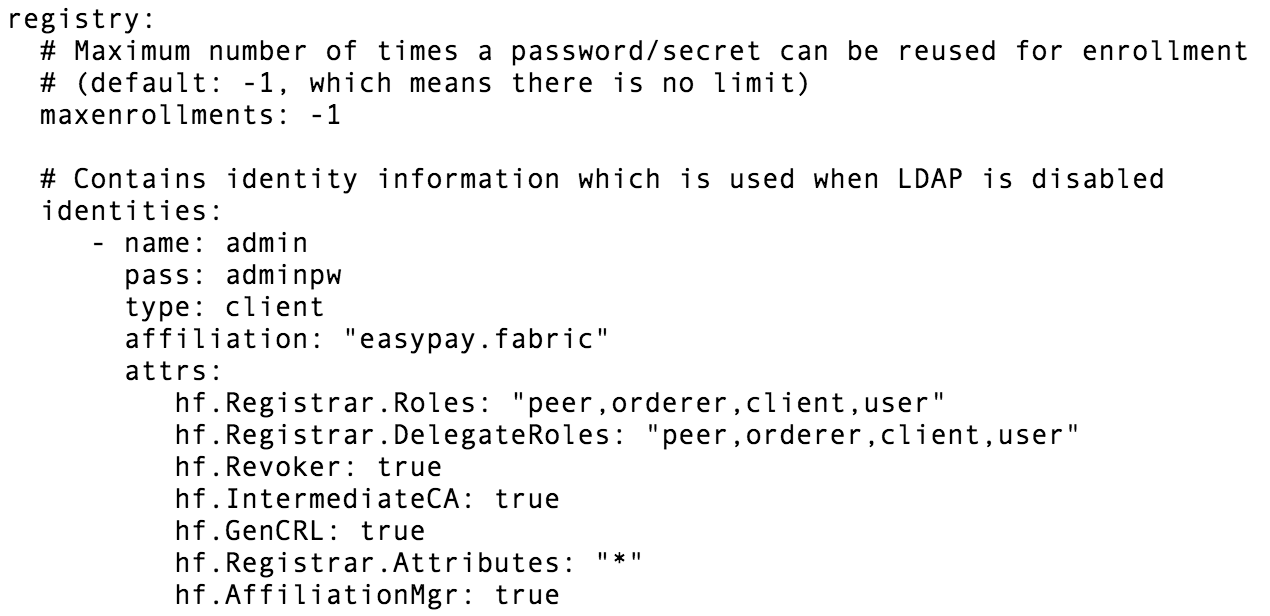

命令如下:
fabric-ca-clientregister-d\
– id.nametest_a\
– id.secrettest_a_pw\
– id.typeclient\
– id.affiliationeasypay.fabric\
– id.attrs”hf .注册者。角色=客户端,用户’ ‘ \
– id.attrs”hf .注册商。代理角色=客户端,用户’ ‘ \
– id.attrs”hf .注册器。属性=* ‘ \
– id.attrshf.Revoker=true\
身份证。阿特SHF。affilatemgr=真\
身份证。阿特瑟夫。intermediateca=真\
身份证。attr SF。GenCrl=假即,设置测试_a用户高频GenCRL=假,结果如下:
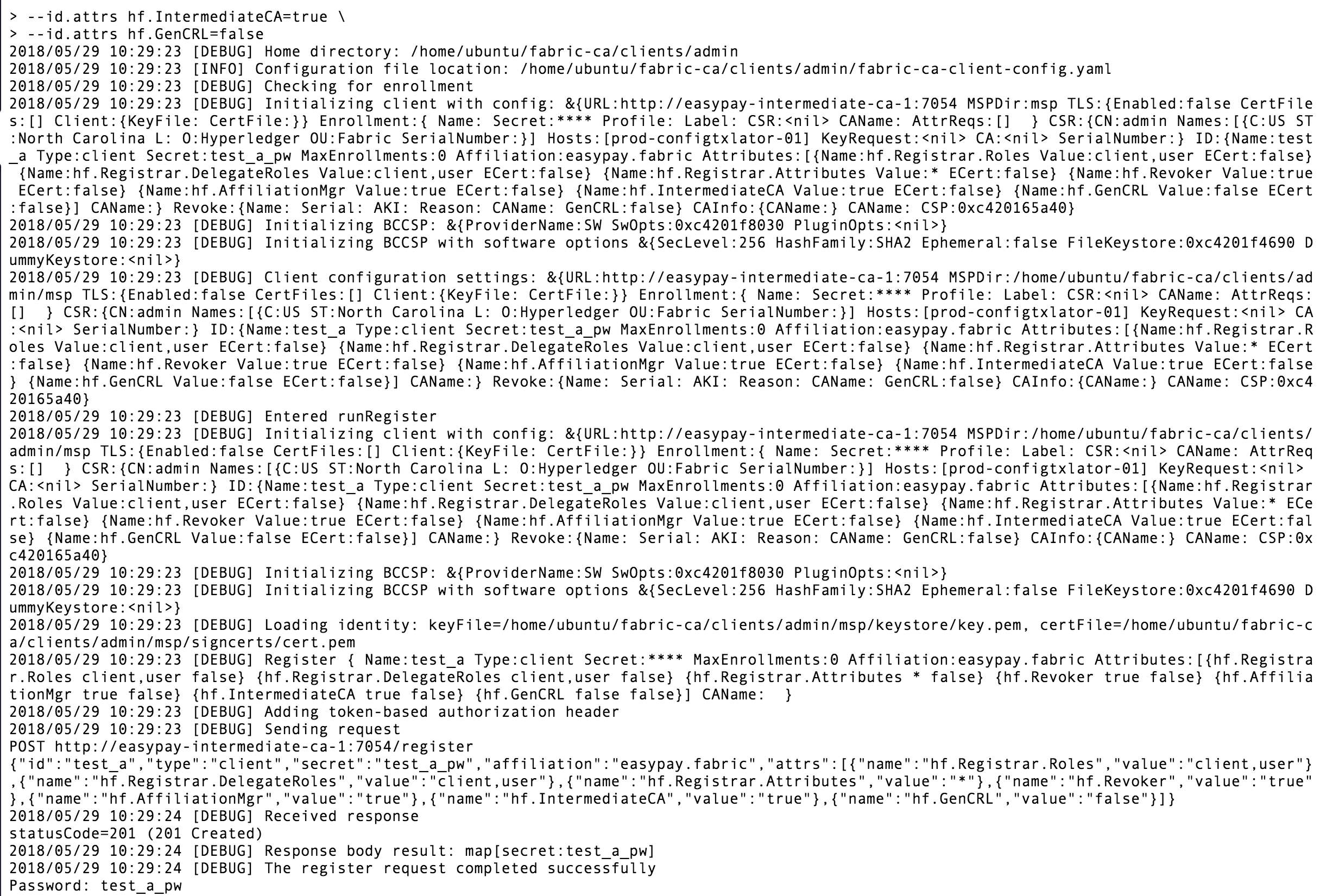
然后我们尝试用测试_a账户分别创建以下几个账户(注意是用测试_a账户,而不是管理账户)
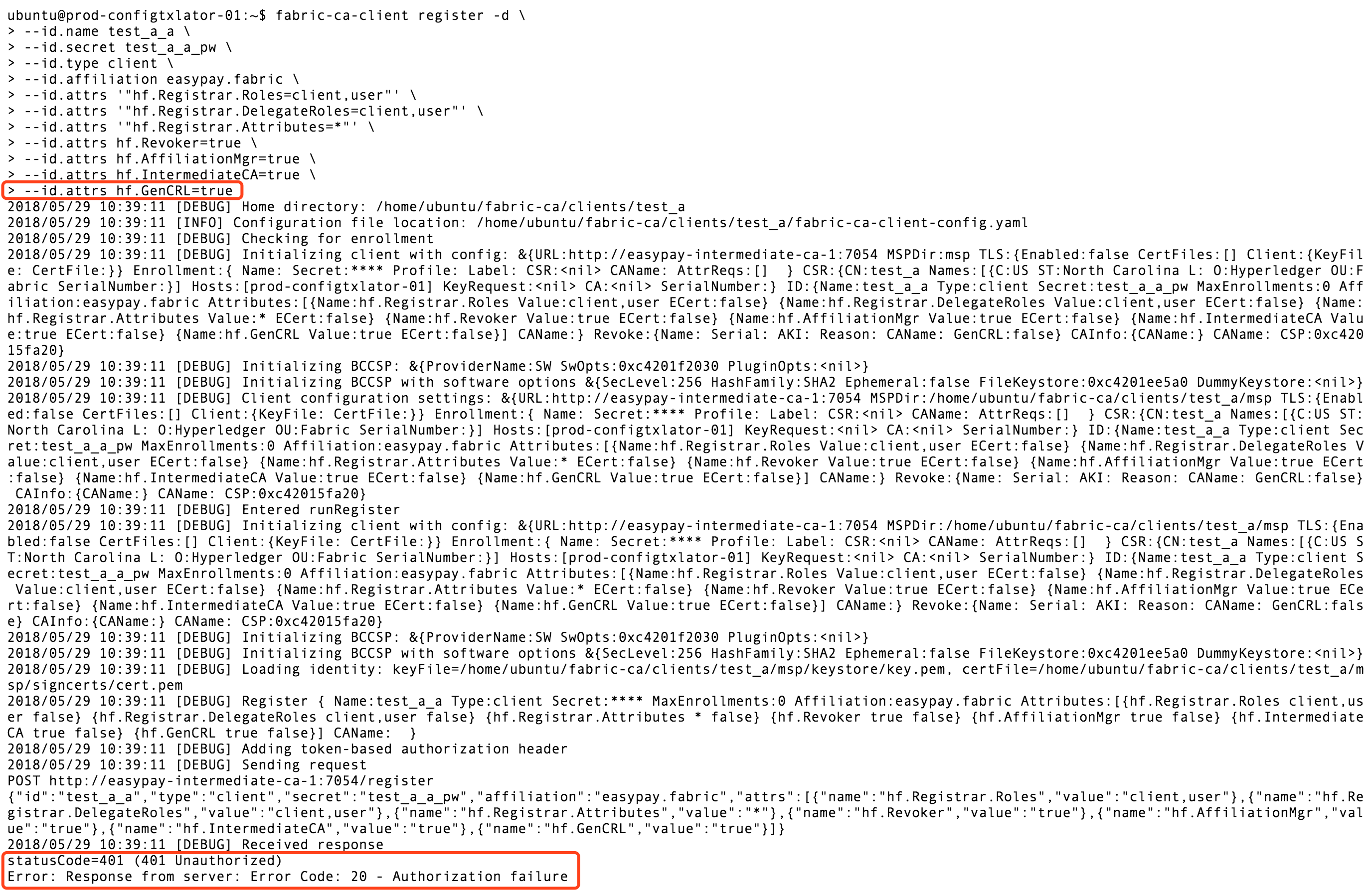
测试_a_a,设置测试a a用户高频。情报
CRL=true:
fabric-ca-client register -d \
--id.name test_a_a \
--id.secret test_a_a_pw \
--id.type client \
--id.affiliation easypay.fabric \
--id.attrs '"hf.Registrar.Roles=client,user"' \
--id.attrs '"hf.Registrar.DelegateRoles=client,user"' \
--id.attrs '"hf.Registrar.Attributes=*"' \
--id.attrs hf.Revoker=true \
--id.attrs hf.AffiliationMgr=true \
--id.attrs hf.IntermediateCA=true \
--id.attrs hf.GenCRL=true
结果创建失败,会报权限错误,如下所示:
-
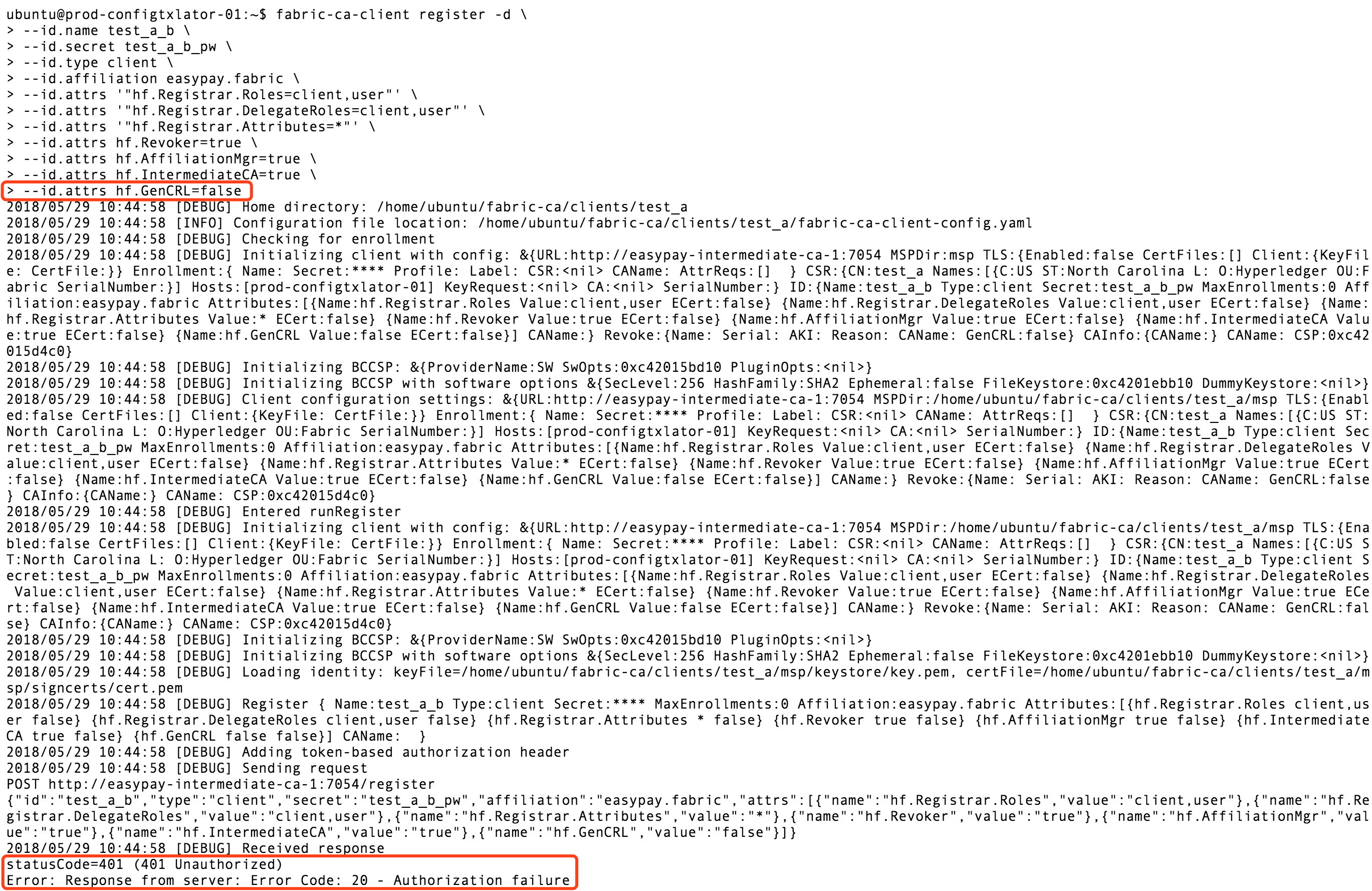
test_a_b,设置test_a_b用户
hf.GenCRL=false:
fabric-ca-client register -d \
--id.name test_a_b \
--id.secret test_a_b_pw \
--id.type client \
--id.affiliation easypay.fabric \
--id.attrs '"hf.Registrar.Roles=client,user"' \
--id.attrs '"hf.Registrar.DelegateRoles=client,user"' \
--id.attrs '"hf.Registrar.Attributes=*"' \
--id.attrs hf.Revoker=true \
--id.attrs hf.AffiliationMgr=true \
--id.attrs hf.IntermediateCA=true \
--id.attrs hf.GenCRL=false
结果同上:
-
test_a_c,不设置test_a_c用户
hf.GenCRL属性:
fabric-ca-client register -d \
--id.name test_a_c \
--id.secret test_a_c_pw \
--id.type client \
--id.affiliation easypay.fabric \
--id.attrs '"hf.Registrar.Roles=client,user"' \
--id.attrs '"hf.Registrar.DelegateRoles=client,user"' \
--id.attrs '"hf.Registrar.Attributes=*"' \
--id.attrs hf.Revoker=true \
--id.attrs hf.AffiliationMgr=true \
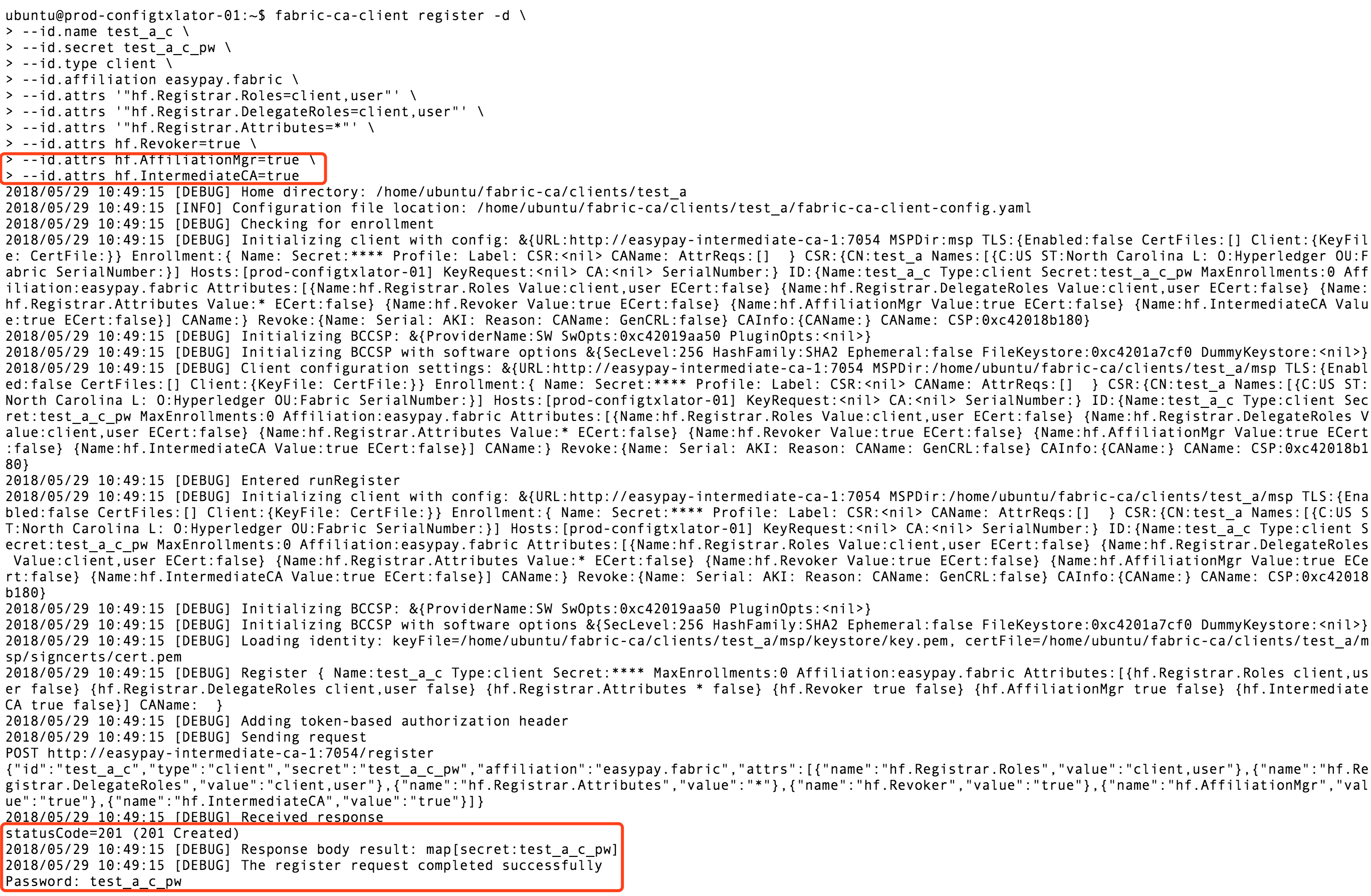
--id.attrs hf.IntermediateCA=true
结果创建成功,如下:
其他几个布尔类型属性,hf.Revoker,hf.AffiliationMgr,hf.IntermediateCA,都有类似现象,即,上级id这些布尔属性如果设置为false(或者不设置),则所创建是下级id都不能带有对应的这个几个布尔类型的系统属性
现象二:hf.Registrar.Roles的约束
刚才创建的test_a身份,id.type=client ,hf.Registrar.Roles=client,user, 如果我们用test_a注册一个id.type=peer或者id.type=orderer的身份 结果会怎样呢?大家应该都想得到,肯定是失败,这里我就不做测试了
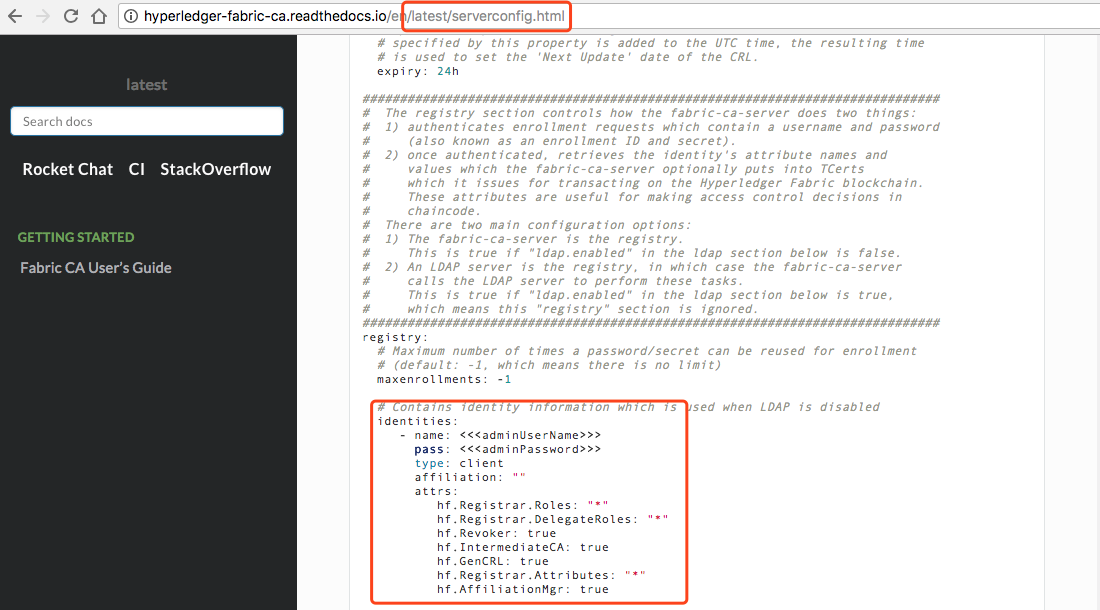
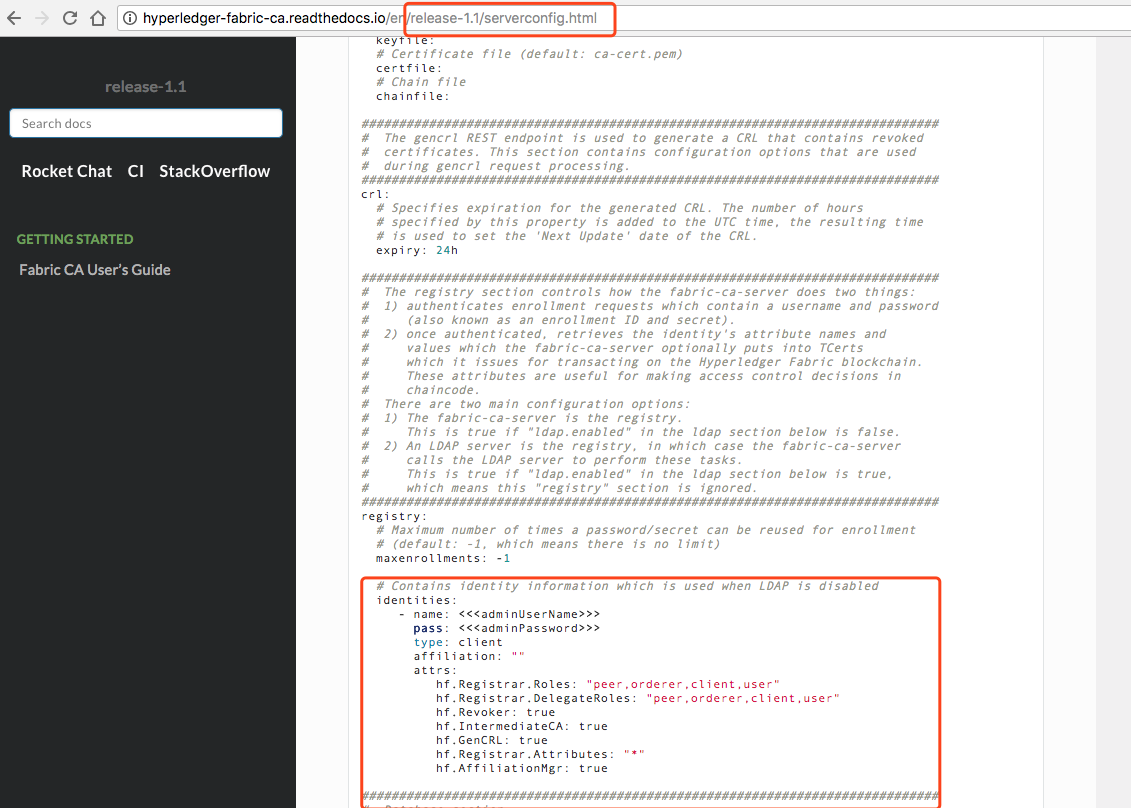
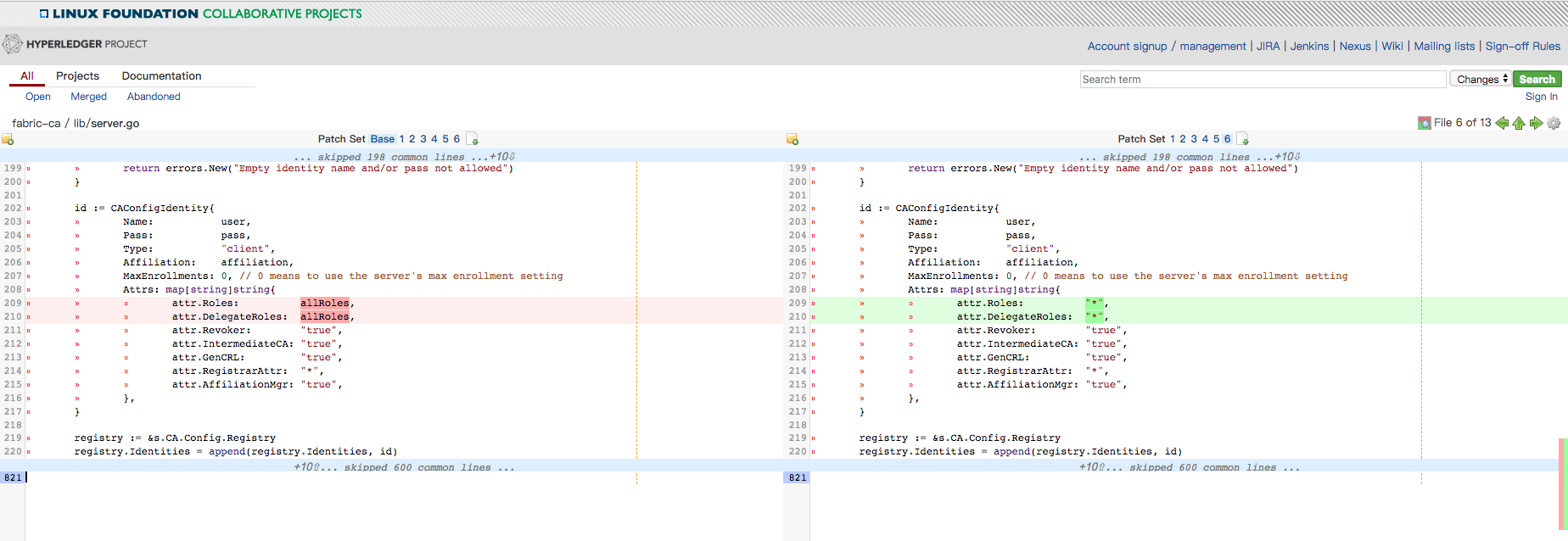
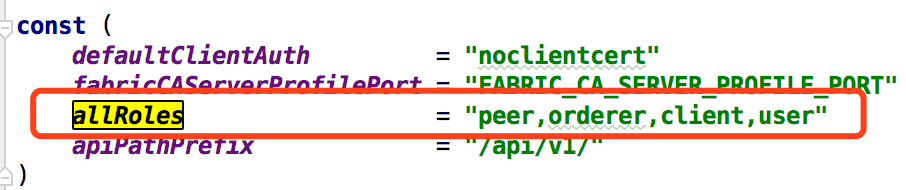
备注:fabric-ca 1.1 版本 hf.Registrar.Roles 属性只支持client,user,peer,orderer四种,1.2版本即将支持自定义角色,详见:https://jira.hyperledger.org/browse/FAB-7882
相关资料截图:

用 test_a 用户创建一个 test_a_d身份,设置test_a_d属性hf.Registrar.Roles=client,user,peer ,如下:
fabric-ca-client register -d \
--id.name test_a_d \
--id.secret test_a_d_pw \
--id.type client \
--id.affiliation easypay.fabric \
--id.attrs '"hf.Registrar.Roles=client,user,peer"' \
--id.attrs '"hf.Registrar.DelegateRoles=client,user,peer"' \
--id.attrs '"hf.Registrar.Attributes=*"' \
--id.attrs hf.Revoker=true \
--id.attrs hf.AffiliationMgr=true \
--id.attrs hf.IntermediateCA=true
结果创建失败,如下:
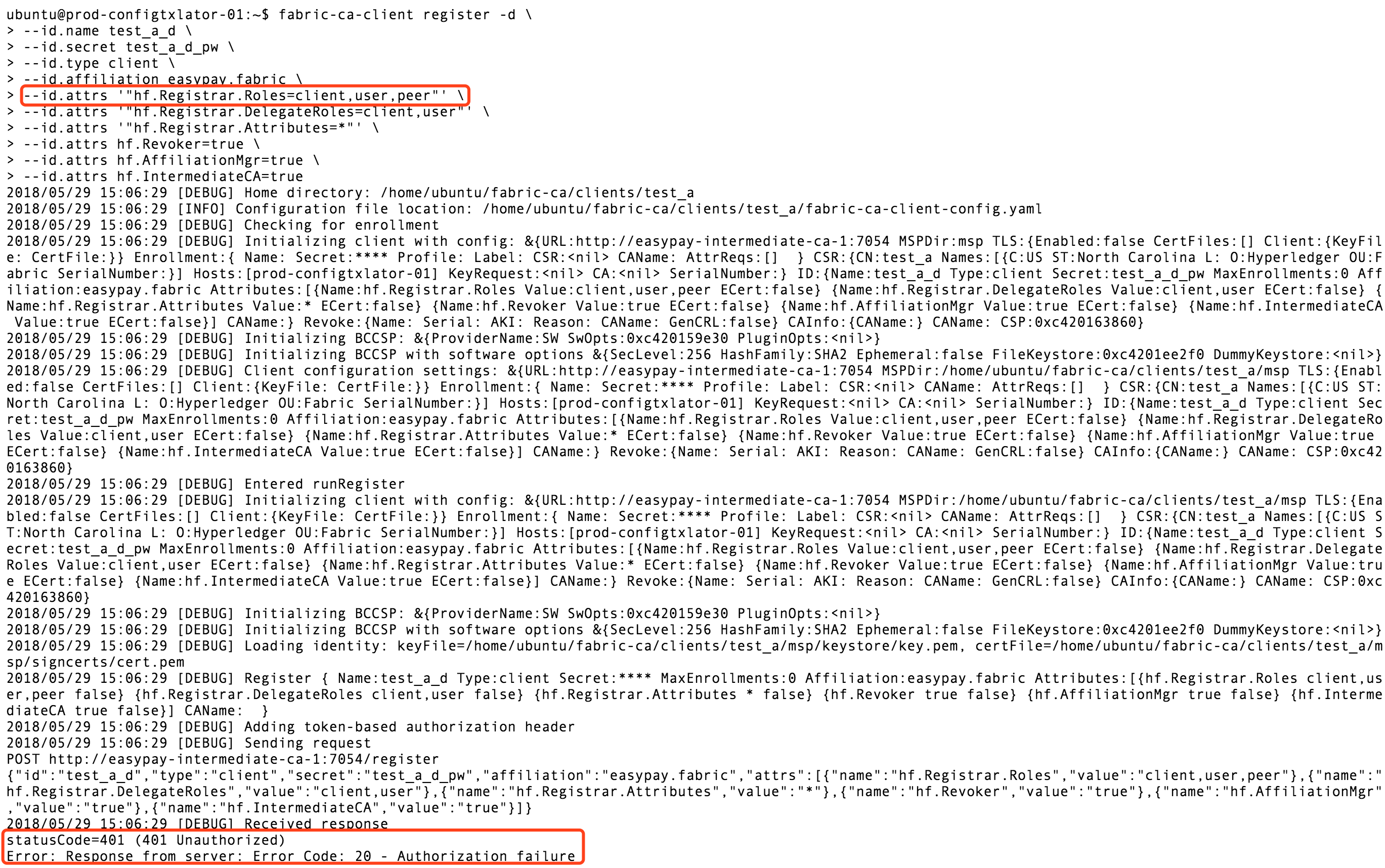
可以继续往下测试,可以发现,当test_a身份的属性hf.Registrar.Roles=client,user ,往下用test_a身份创建的子身份的f.Registrar.Roles属性值都不能超过client,user的范围
再用 test_a 用户创建一个 test_a_e身份,设置test_a_e 属性id.type=peer ,如下:
fabric-ca-client register -d \
--id.name test_a_e \
--id.secret test_a_e_pw \
--id.type peer \
--id.affiliation easypay.fabric \
--id.attrs '"hf.Registrar.Roles=client,user"' \
--id.attrs '"hf.Registrar.DelegateRoles=client,user"' \
--id.attrs '"hf.Registrar.Attributes=*"' \
--id.attrs hf.Revoker=true \
--id.attrs hf.AffiliationMgr=true \
--id.attrs hf.IntermediateCA=true
结果创建失败,错误信息如下:

子 id 的id.type属性值也受到上级id的hf.Registrar.Roles属性值的约束
现象三:hf.Registrar.Attributes 属性的约束
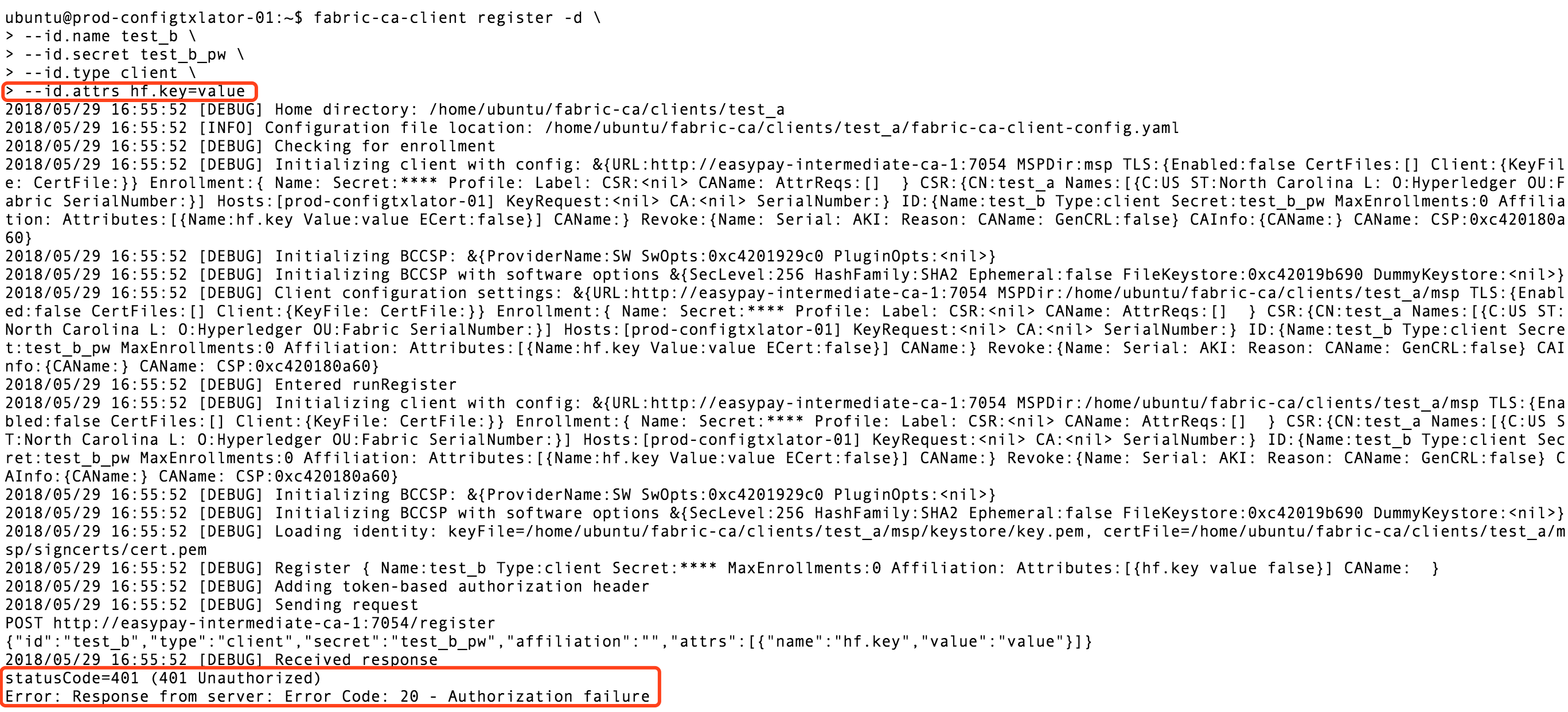
尝试用 admin 身份 创建 test_b ,添加hf.key=value
fabric-ca-client register -d \
--id.name test_b \
--id.secret test_b_pw \
--id.type client \
--id.attrs hf.key=value
即使admin身份hf.Registrar.Attributes=*,还是创建失败,结果如图
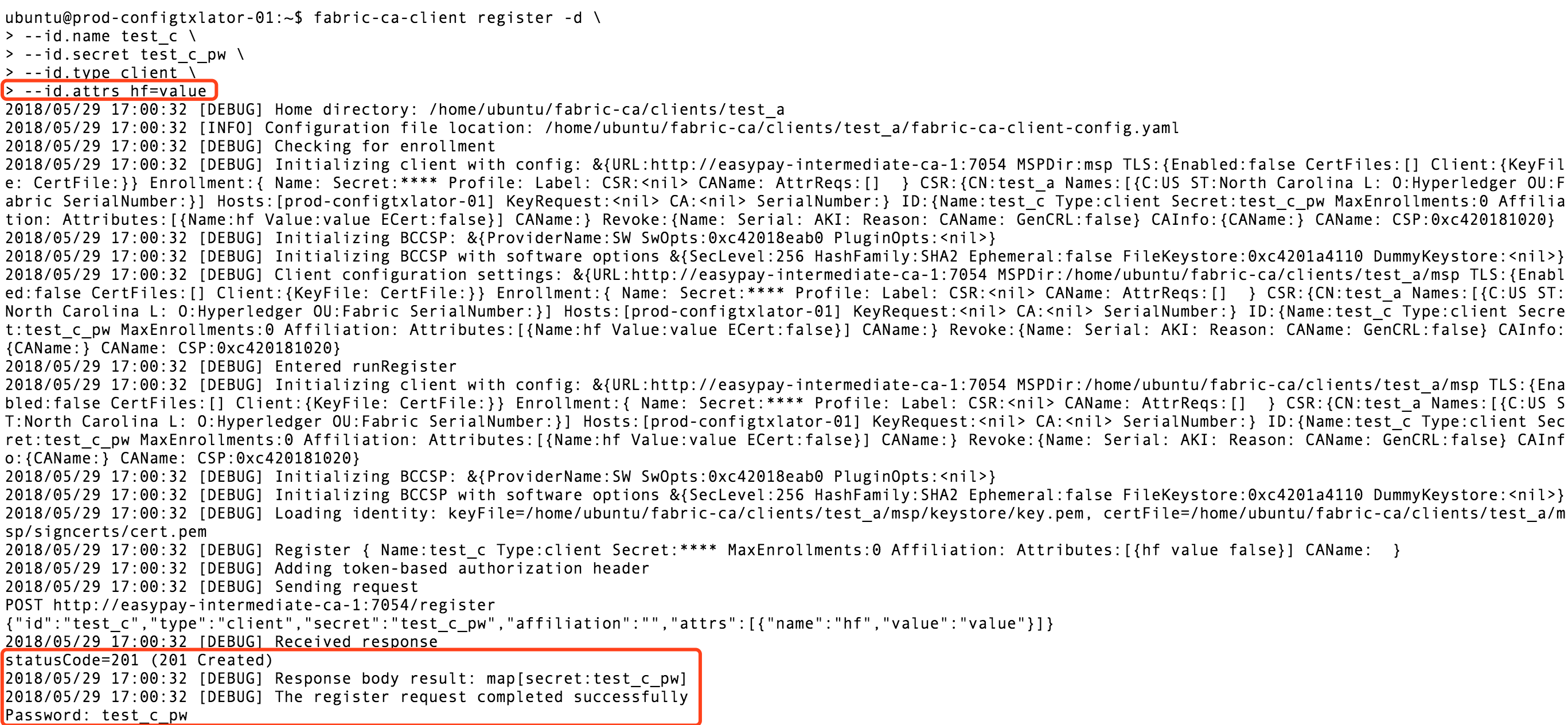
再尝试用 admin 身份 创建 test_c,添加hf=value
fabric-ca-client register -d \
--id.name test_c \
--id.secret test_c_pw \
--id.type client \
--id.attrs hf=value
创建成功,结果如图
总结下来,有以下几点规律:
-
上级id的
hf.Registrar.Attributes值可以约束它所创建的子级id能添加的属性,但是带hf.的除外,带hf.开头的会被当做系统属性,区别对待 -
从上级往下,所带的属性约束只能是逐渐收敛的,不能发散
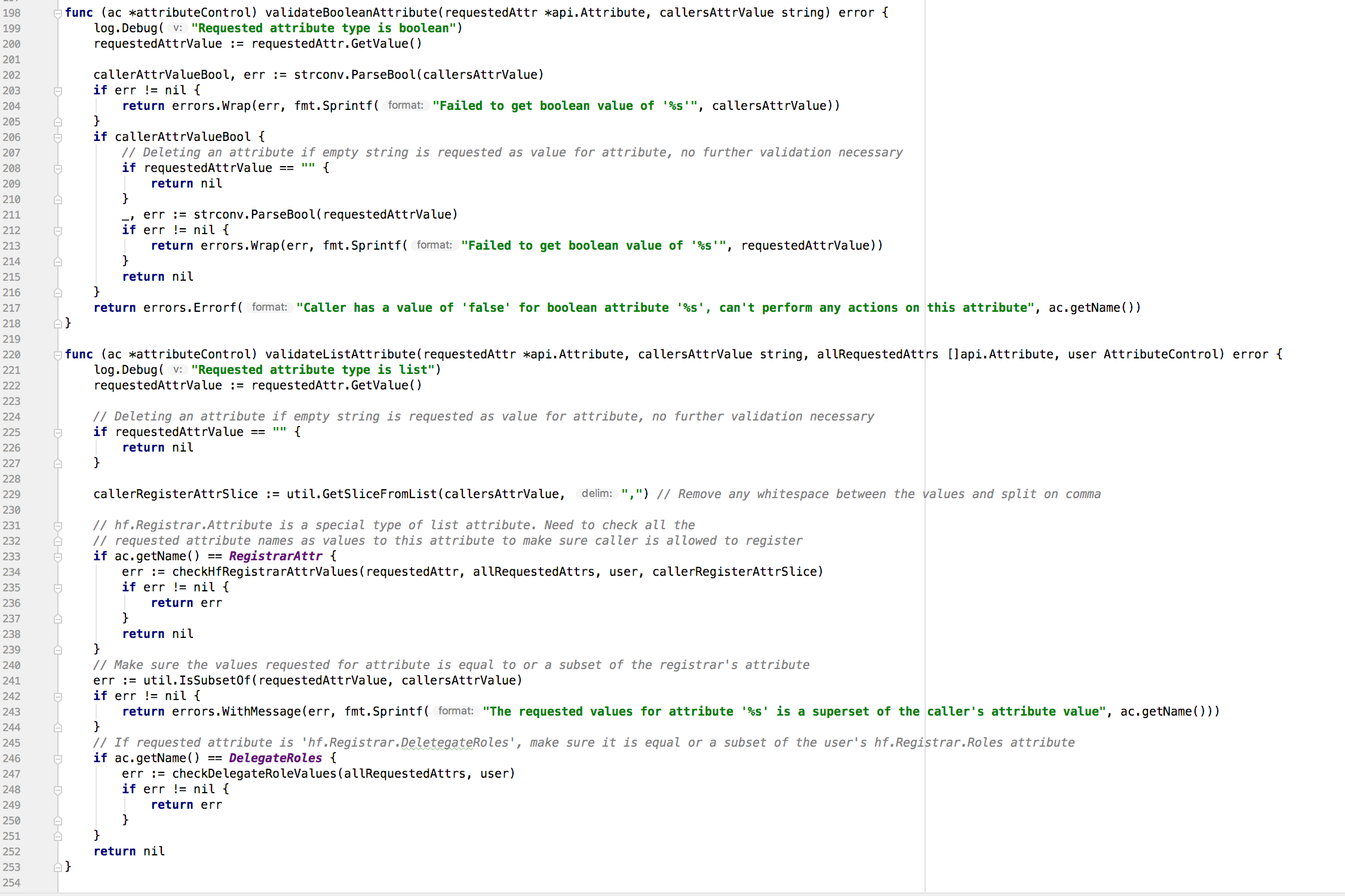
相关代码
感兴趣可以详细研究一下源代码 相关部分代码可以参见:https://github.com/hyperledger/fabric-ca/blob/release-1.1/lib/attr/attribute.go
感谢各位的阅读!关于“Fabric CA创建用户机制的示例分析”这篇文章就分享到这里了,希望
内容来源网络,如有侵权,联系删除,本文地址:https://www.230890.com/zhan/158391.html